

About one-third of Americans believe that 9/11 was an inside job by the Bush Administration. source: Scientific American.
Now, unlike the moon landings or the flat Earth, that is a dangerous conspiracy theory. And if you believe it, you’d better have a damn good reason to. And from what I have read and explored, there are no good reasons to believe it. Not when you really and honestly look for real explanations. Like when the 2017 Grenfell Tower fire left the building still standing – that gave new life to the ‘Truthers’ who were quick to try and draw parallels between 9/11 and that, while ignoring even the most basic facts – unlike building 7, this was a concrete structure!
Anyone who has ever read my blog before won’t be surprised by my stance on this and other conspiracy theories: “Where is the evidence?” You see, it’s not enough to point and say “This feels wrong, because this and that, you have to show evidence that supports your point of view.
And, no – asking questions is not evidence. Asking the question is the first step in wanting to know. But if you do not look for answers, you do not achieve much.
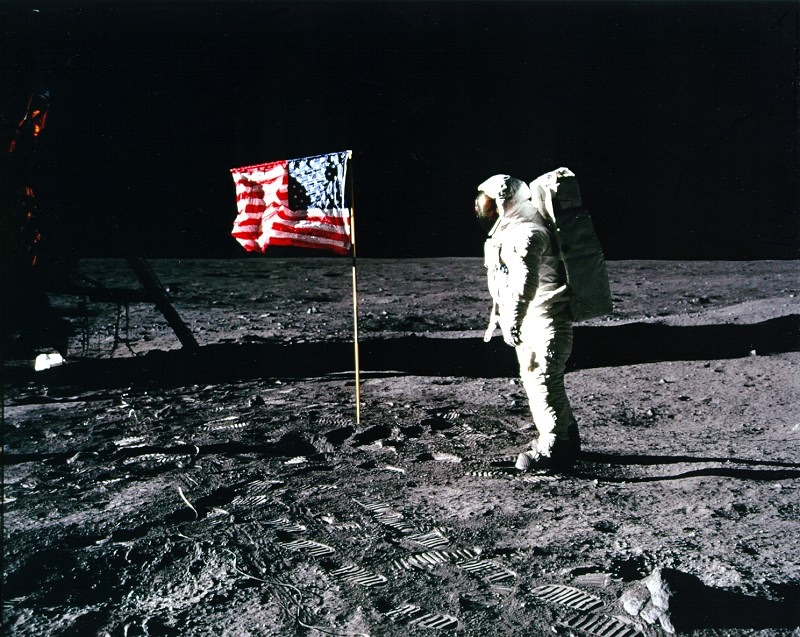
Another legitimate question, which I would say is DEVASTATING to almost any conspiracy theory, is: How can such a large group of people keep a secret? Take so-called moon-landing conspiracies. “At its peak, the Apollo program employed 400,000 people and required the support of over 20,000 industrial firms and universities”. (source: Wikipedia). None of those people ever produced any convincing evidence that the Moon Landings were faked.
Yet, a vast number of people, not only in the US, believe that the moon landings were faked. Based on what? No, seriously, based on what? On the ramblings of people who do know how to pose a question but are too lazy to look for an answer. They ramble on about how there are no stars, without bothering to look at the explanations for themselves.
And yes, there are a lot of them. Almost every conspiracy theorist I talked to, both online and in person, has no interest in looking for an answer. They are delighted with mindlessly repeating whatever the latest question they read online from others like them.
True, some might take a look for themselves. Still, they are usually so disconnected from reality that they will ignore their rational minds and look for alternative, nearly impossible explanations to keep the conspiracies alive. When told that stars are too faint to see because the camera wasn’t set up for recording stars, but in the foreground, they lose their sh*t. But I guess that insulting and asking stupid questions is easier than learning about ISO, aperture, shutter speed, etc.
An interesting video I have found and mentioned several times is this one, where a Film Director explains that it would be impossible to fake Moon Landings using the technology available at the time. Another point in the Argument is how it would be easier to go to the Moon than to fake it.
To make a point about conspiracy theories in general, by sticking to the “Moon landing Hoax”, even if a third party confirms something, for example. When the Japanese Space Agency obtained photos proving Moon Landings (wiki), conspiracy theorists immediately say that they are paid by the US government. Where does it stop, you guys?
You see, Conspiracy theories rarely, very, very infrequently provide any evidence of their own. Their favourite tactic is trying to poke holes in the existing evidence, using half-measures and half-brain. I guess if they’re loud enough, some people will believe them rather than look at the evidence. Just like the flat Earth.
But “Why?” is the question we’re examining today. How can one stand and defend their position even when there’s an astonishing amount of evidence to the contrary? Well, as I mentioned at the beginning of the post, looking for patterns and feeling out of control are among the reasons. Here’s another, and it’s called “Confirmation Bias“.
Confirmation Bias as defined by Wikipedia is “the tendency to search for, interpret, favor, and recall information in a way that confirms one’s preexisting beliefs or hypotheses, while giving disproportionately less consideration to alternative possibilities.”.
Wikipedia contributors. “Confirmation bias.” Wikipedia, The Free Encyclopedia. 10 Aug. 2019. Web. 12 Aug. 2019.
What this means is that people have a belief, and then we look for evidence that supports it. This also means that if they find evidence that contradicts our religion, they’re likely to ignore it.
An example of asking a question, understanding the problem and looking for an answer. But if you stop asking the question, you achieve almost nothing, especially if you’re already set not to believe the answer.
Why? Why do people so easily fall victim to believing in conspiracies?
Some studies1 say that people who strongly believe in conspiracy theories have one thing in common: they feel they don’t have control over their lives.
It seems that most conspiracy theories appear in times of uncertainty. This is when our brains are in overdrive, trying to figure out what is happening and why. The human brain is wired to look for patterns, as this behaviour helped our ancestors survive as they roamed the African savannas. This means we are looking for patterns everywhere, in every situation. And sometimes the brain will malfunction, connecting two things that are not actually connected.
As I read in this meta-analysis of TIME magazine, researchers found a connection between feeling in control and believing in conspiracy theories.
Of course, this can easily lead to a slippery slope, because, for example, one study2 has shown that if you believe in one conspiracy theory, you’re more likely to consider another.
I also believe that many conspiracy theorists are motivated not only by fear but also by their egos and a desire to feel smarter than the average chump who hasn’t figured out what is going on. It’s a seductive illusion, a feeling that you’re brighter than others who are ‘sheep’ and unquestioningly believe.
This way of behaving can be dangerous, as people can come to see every piece of news as a “cover-up” for something. And you don’t have to be very imaginative or think too hard about where this might lead you: “tin-foil hat” territory. If you’re a believer in conspiracy theories, you might instead ask yourself whether you have any fears or insecurities about the state of the world. Or you might want to ask yourself if you might have a subconscious need to feel better and/or wiser than others.
Or you might try some introspection next time when you’re discussing your favourite conspiracy. Does it make you feel irrational or over-emotional? Those might be the signs you should take a deeper look at the facts and look for answers to your questions. You can do this.
- The Influence of Control on Belief in Conspiracy Theories: Conceptual and Applied Extensions – http://onlinelibrary.wiley.com/doi/10.1002/acp.3161/abstract
- Medical Conspiracy Theories and Health Behaviors in the United States – http://jamanetwork.com/journals/jamainternalmedicine/fullarticle/1835348
- Psych Central – Patterns: The Need for Order
Further reading
- TIME: Here’s Why People Believe In Conspiracy Theories
- Scientific American: Why Do People Believe in Conspiracy Theories?
- Confirmation Bias
